
Vocal Cord Surgery: When Is It Needed for Persistent Voice Problems?
Your voice plays an important role in communication, work, and everyday life. A temporary change in voice after a cold, throat infection, or excessive speaking is usually not a serious concern. However, when hoarseness, weak voice, voice breaks, or difficulty speaking continues for a long time, it may indicate an underlying problem affecting the vocal cords. The vocal cords are delicate tissues inside the voice box, or larynx, that vibrate when air passes through them to produce sound. Problems such as vocal cord polyps, nodules, cysts, inflammation, scarring, or vocal cord paralysis can interfere with their normal movement and vibration. Depending on the cause, voice problems may improve with medication, lifestyle changes, voice therapy, or vocal rest. In some cases, however, vocal cord surgery may be recommended.
What Are the Vocal Cords?
The vocal cords, also known as vocal folds, are two flexible bands of tissue located inside the larynx. They open when you breathe and come together and vibrate when you speak. The smooth movement and vibration of these tissues are important for producing a clear and natural voice. When the vocal cords become swollen, develop a lesion, become scarred, or do not move properly, the quality of the voice can change. A person may experience hoarseness, breathiness, a rough or strained voice, reduced vocal strength, or difficulty speaking for a long time.
What Causes Persistent Voice Problems?
Persistent voice problems can have many different causes. One common cause is excessive or improper use of the voice. Frequent shouting, prolonged speaking, singing without proper technique, or speaking loudly over background noise can place repeated stress on the vocal cords. Other causes include vocal cord polyps, nodules, cysts, inflammation, acid reflux, smoking, allergies, infections, neurological conditions, and vocal cord movement disorders. Because similar symptoms can occur with different conditions, an ENT examination is important for identifying the actual cause.
Vocal Cord Polyps
A vocal cord polyp is a usually benign growth that develops on the vocal cord. It can develop following repeated vocal strain or irritation and may be associated with activities such as frequent shouting or prolonged speaking. Smoking and other forms of irritation can also contribute to vocal cord problems. A polyp may interfere with the normal vibration of the vocal cords and cause persistent hoarseness, a rough voice, voice fatigue, or changes in vocal range. Depending on the size and characteristics of the polyp, treatment may involve voice therapy or, in selected cases, vocal cord polyp surgery.
Vocal Cord Nodules
Vocal cord nodules are small areas of thickened tissue that commonly develop because of repeated vocal strain. They may occur in people who use their voices frequently, including teachers, singers, trainers, public speakers, and other professionals. Voice therapy and changes in speaking habits are often important parts of treatment. Surgery is not required for every patient and is generally considered only when appropriate conservative treatment does not provide sufficient improvement.
Vocal Cord Cysts
A vocal cord cyst is a small sac-like lesion that can affect the normal vibration of the vocal cord. Depending on its size and location, it may cause persistent hoarseness, voice fatigue, or difficulty producing certain sounds. If a cyst continues to affect the voice despite appropriate non-surgical treatment, an ENT specialist may recommend a surgical procedure to treat or remove it.
Vocal Cord Scarring
Scarring of the vocal cords can occur after injury, surgery, infection, or other forms of tissue damage. Scar tissue can reduce the flexibility of the vocal cord and interfere with its normal vibration. Treatment for vocal cord scarring depends on its severity and location. Some patients may benefit from voice therapy, while others may require specialized procedures or surgery.
Vocal Cord Paralysis
Vocal cord paralysis occurs when one or both vocal cords cannot move normally. It may cause a weak or breathy voice and, in some cases, swallowing or breathing difficulties. Treatment depends on the underlying cause and severity of the condition. Some cases may improve without surgery, while selected patients may require procedures designed to improve vocal cord position and function.
When Is Vocal Cord Surgery Needed?
Vocal cord surgery is not necessary for every person with hoarseness or a voice disorder. Doctors generally first identify the underlying cause and determine whether the condition can be managed with voice therapy, medication, vocal rest, or lifestyle changes. Surgery may be considered when a structural abnormality remains persistent, significantly affects the voice, does not respond adequately to conservative treatment, or requires removal for further examination.
When a Vocal Cord Lesion Persists
Some vocal cord lesions may improve with voice therapy, vocal rest, hydration, and treatment of contributing conditions. However, when a lesion remains present and continues to interfere with normal vocal function, surgical treatment may be considered. The decision depends on the type, size, location, appearance, and effect of the lesion on the patient’s voice.
When a Vocal Cord Polyp Affects Your Voice
A vocal cord polyp can interfere with normal vocal cord vibration and make the voice sound rough, weak, or hoarse. If the polyp persists despite appropriate non-surgical management, vocal cord polyp surgery may be recommended. The objective is to treat the abnormal tissue while preserving as much healthy vocal cord tissue as possible.
When Voice Problems Affect Daily or Professional Life
For some people, voice problems can significantly interfere with their daily activities or careers. Teachers may find it difficult to speak throughout the school day, singers may experience changes in their vocal range, and public speakers or customer-service professionals may develop significant voice fatigue. When a structural vocal cord problem affects communication or professional voice use, an ENT specialist can evaluate whether surgery or another form of voice disorder treatment may be appropriate.
When a Lesion Requires Further Examination
Certain vocal cord lesions may need to be removed or sampled so that the tissue can be examined more closely. This can help doctors determine the exact nature of the lesion and select appropriate treatment. Persistent or unexplained voice changes should therefore not be ignored, particularly when they continue despite basic measures such as voice rest.
How Are Vocal Cord Problems Diagnosed?
Before recommending vocal cord surgery, an ENT specialist usually performs a detailed evaluation. The doctor may ask about when the voice problem started, whether it is constant or intermittent, whether it becomes worse after speaking, and whether there are other symptoms such as difficulty swallowing or breathing. The patient’s smoking history, occupational voice use, reflux symptoms, allergies, previous surgeries, infections, and other relevant medical factors may also be considered.
Examination of the Vocal Cords
The vocal cords can be examined using a specialized scope that allows the ENT specialist to view the larynx. This examination can help identify swelling, nodules, polyps, cysts, lesions, scarring, or abnormalities in vocal cord movement. Depending on the findings, additional tests or specialized voice assessments may be recommended to understand how the vocal cords are functioning.
Voice Assessment
A detailed voice assessment may be useful for understanding how a vocal cord problem affects speech. This can be particularly important for professional voice users such as singers, teachers, actors, and public speakers, for whom even a small change in voice quality can have a major impact.
What Is Vocal Cord Surgery?
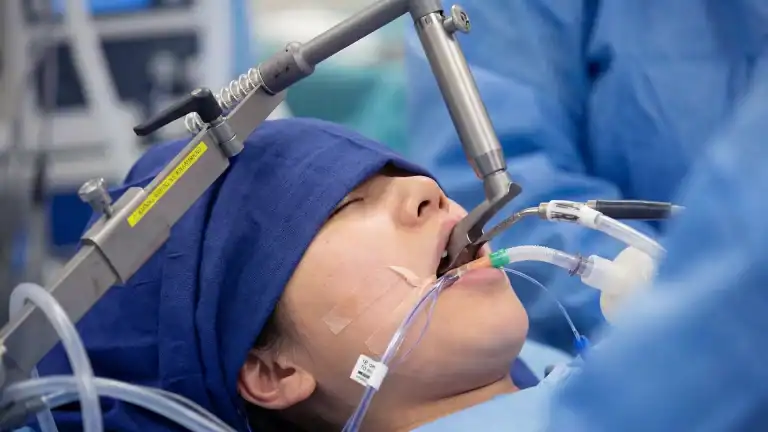
- Vocal cord surgery includes procedures used to treat specific structural problems affecting the vocal cords or larynx. One commonly used approach for certain lesions is microlaryngeal surgery.
- In many cases, the surgeon can access the vocal cords through the mouth, which means there is generally no external incision on the neck. Specialized instruments and magnification can be used to carefully examine and treat the affected tissue.
- The exact surgical technique depends on the diagnosis. A vocal cord polyp, cyst, scar, or other lesion may require a different approach.
What Happens During the Procedure?
- Vocal cord surgery is generally performed under anesthesia. The surgeon carefully accesses the larynx and examines the affected vocal cord. If a lesion such as a polyp or cyst is present, it may be removed using specialized surgical instruments.
- One of the important goals of surgery is to treat the abnormal tissue while preserving healthy vocal cord tissue and supporting normal vibration as much as possible.
- The duration of the procedure and the specific surgical technique vary depending on the patient’s condition.
What Is Recovery Like After Vocal Cord Surgery?
Recovery after vocal cord surgery varies depending on the type of procedure, the condition being treated, and the individual patient’s healing process. Your ENT specialist will provide specific instructions regarding voice use, medication, diet, and follow-up care.
Voice Rest After Surgery
Voice rest may be recommended during the early recovery period. The purpose is to give the vocal cords sufficient time to heal and reduce unnecessary stress on the operated area. The amount of voice rest required can vary between patients, so it is important to follow the instructions provided by the treating doctor.
Gradual Return to Normal Speaking
After the initial healing period, patients may gradually return to normal speaking according to medical advice. Excessive talking, shouting, singing, or other activities that place significant strain on the vocal cords should generally be avoided until the doctor considers them appropriate.
Role of Voice Therapy
Voice therapy may be recommended before or after surgery. A qualified voice therapist can help patients improve speaking techniques, reduce unnecessary vocal strain, and develop healthier voice habits. Surgery can treat a structural problem, but maintaining healthy voice-use habits can be important for achieving and maintaining good long-term results.
Can Voice Problems Be Treated Without Surgery?
Yes. Vocal cord surgery is only one option for treating voice disorders. Depending on the underlying condition, treatment may include voice therapy, medication, hydration, vocal rest, reflux management, smoking cessation, and changes in speaking habits. For example, people who frequently shout or speak loudly may benefit from learning better voice-use techniques. Patients with reflux-related throat irritation may benefit from appropriate treatment for reflux. The most effective voice disorder treatment depends on the specific cause of the problem. This is why proper diagnosis should come before deciding whether surgery is necessary.
How Can You Protect Your Vocal Cords?
- Protecting your vocal cords can help reduce irritation and unnecessary strain. Staying well hydrated, avoiding excessive shouting, taking regular voice breaks, and using appropriate speaking techniques can support vocal health.
- Smoking should also be avoided because tobacco smoke can irritate the larynx and is associated with serious diseases affecting the respiratory and voice systems.
- People who regularly use their voices for work should pay particular attention to vocal hygiene. Teachers, singers, trainers, call-centre professionals, and public speakers may benefit from learning proper breathing and speaking techniques and taking adequate breaks.
- If acid reflux, allergies, or another condition is contributing to throat irritation, appropriate medical management can also help protect the vocal cords.
When Should You See an ENT Specialist?
- A temporary hoarse voice after a cold or heavy voice use often improves as the irritation settles. However, persistent, recurring, or unexplained voice changes should be evaluated by an ENT specialist.
- You should seek medical advice if you experience ongoing hoarseness, repeated voice loss, persistent voice fatigue, difficulty speaking, pain while speaking, swallowing difficulties, breathing problems, coughing up blood, or other unusual symptoms.
- People who smoke should be particularly careful about persistent hoarseness and should not assume that it is simply caused by throat irritation.
- Early evaluation can help identify the cause of the voice problem and determine whether medication, voice therapy, lifestyle changes, vocal cord lesion treatment, or surgery may be appropriate.
Vocal Cord Surgery and Voice Disorder Treatment at Mediheal Hospital
At Mediheal Hospital, patients experiencing persistent voice problems can undergo an ENT evaluation to identify the underlying cause of their symptoms. A detailed examination can help determine whether the problem is related to a vocal cord polyp, nodule, cyst, lesion, inflammation, scarring, vocal cord movement problem, or another condition affecting the larynx. Treatment is selected according to the patient’s individual diagnosis and needs. Depending on the condition, the doctor may recommend medical treatment, voice therapy, lifestyle changes, observation, or an appropriate surgical procedure. If persistent hoarseness or another voice problem is affecting your communication, work, or quality of life, consulting an ENT specialist can be an important step toward finding the right treatment.
Frequently Asked Questions About Vocal Cord Surgery
Is vocal cord surgery necessary for every vocal cord polyp?
No, not every vocal cord polyp requires surgery. Depending on its size, duration, symptoms, and underlying cause, an ENT specialist may initially recommend voice therapy, vocal rest, lifestyle changes, or other treatments. Surgery may be considered when the polyp persists or significantly affects the patient’s voice.
What is vocal cord lesion treatment?
Vocal cord lesion treatment refers to the management of abnormal tissue or changes affecting the vocal cords. Depending on the type and severity of the lesion, treatment may include observation, voice therapy, medication, lifestyle changes, or surgery.
Can vocal cord polyps come back after surgery?
A vocal cord polyp can recur, particularly when the factors that contributed to its development continue. Excessive voice strain, smoking, and poor vocal habits may contribute to ongoing vocal problems. Following post-operative instructions and maintaining healthy voice habits can help support recovery.
Will my voice become normal after vocal cord surgery?
Many patients experience improvement after appropriate treatment, but the outcome depends on factors such as the type and severity of the vocal cord problem, the procedure performed, healing, and individual health factors. Your ENT specialist can explain the expected outcome after examining your vocal cords.
Is voice therapy required after vocal cord surgery?
Voice therapy may be recommended depending on the diagnosis and procedure. It can help patients develop healthier speaking techniques and reduce unnecessary stress on the vocal cords during recovery.
Is vocal cord surgery painful?
The procedure is generally performed under anesthesia, so patients do not feel the surgery itself. Some patients may experience temporary throat discomfort or voice changes after the procedure. Your doctor will provide specific instructions for recovery and symptom management.
Can smoking cause vocal cord problems?
Smoking can irritate the vocal cords and larynx and is associated with serious diseases of the voice box. Anyone who smokes and develops persistent hoarseness should consider an ENT evaluation.
Can acid reflux affect the voice?
Yes. Acid reflux can irritate the throat and larynx in some people and may contribute to voice symptoms. If reflux is suspected, an ENT specialist can evaluate the symptoms and recommend appropriate management.
What should I do if my voice suddenly disappears?
Sudden voice loss can have different causes, including infection, inflammation, vocal strain, or problems affecting vocal cord movement. If the voice does not recover as expected, or if voice loss occurs with breathing or swallowing difficulties, medical evaluation should be sought promptly.
Conclusion
Persistent voice problems should not always be dismissed as ordinary hoarseness. Vocal cord polyps, nodules, cysts, lesions, inflammation, scarring, vocal cord paralysis, reflux, and excessive voice strain can all contribute to changes in voice. Many voice disorders can be managed successfully once their underlying cause is identified. Vocal cord surgery may be recommended for selected patients when a structural lesion persists, significantly affects the voice, does not respond adequately to conservative treatment, or requires further examination. If you are experiencing persistent hoarseness, repeated voice loss, voice fatigue, or another unexplained change in your voice, an ENT specialist can evaluate the condition and recommend an appropriate treatment plan. For evaluation and treatment of vocal cord conditions and persistent voice problems, consult the ENT specialists at Mediheal Hospital.