
Head & Neck Tumor Surgery: When Is Surgical Treatment Recommended?
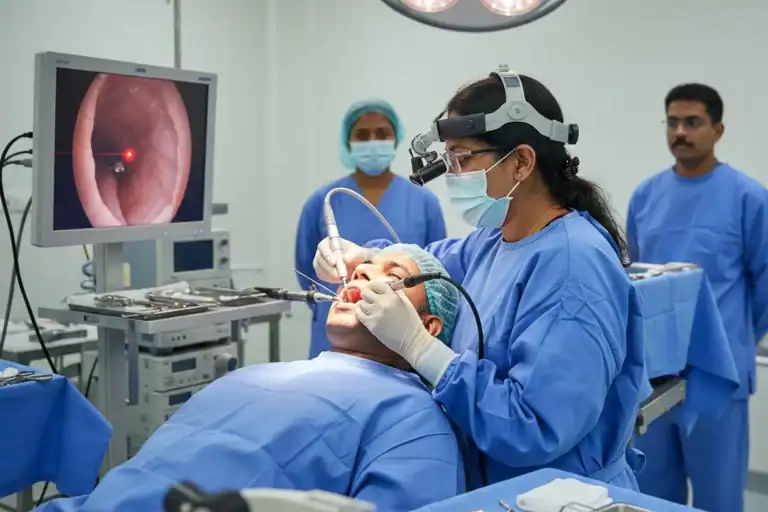
A lump, swelling, persistent sore, or unusual growth in the head or neck can be worrying, especially when investigations suggest a tumor. While not every tumor is cancerous, some head and neck tumors require timely evaluation and treatment. Depending on the location, size, type, and stage of a tumor, surgery may be recommended to remove the tumor and, in some cases, nearby lymph nodes or affected tissues. Head and neck tumor surgery is a specialized treatment used for selected tumors involving areas such as the mouth, tongue, throat, larynx, nose, sinuses, salivary glands, jaw, and neck. The goal is not simply to remove the visible tumor but to control the disease while preserving important functions such as speaking, swallowing, breathing, chewing, and facial appearance whenever possible. At Mediheal Hospital, patients with suspected or confirmed head and neck tumors can discuss their condition with a specialist to understand the diagnosis, available treatment options, and whether surgery is appropriate for their individual case.
What Are Head and Neck Tumors?
Head and neck tumors can develop in different tissues and organs located in the head and neck region. These may include the oral cavity, tongue, throat, tonsils, larynx, salivary glands, nasal cavity, sinuses, thyroid region, jaw, and lymph nodes of the neck. Some tumors are benign, meaning they are not cancerous. Others are malignant and can invade nearby tissues or spread to lymph nodes and other parts of the body. The treatment approach depends on several factors. Doctors consider the exact location of the tumor, its size, whether it has invaded surrounding structures, whether lymph nodes are involved, the tumor’s pathology, and whether it has spread elsewhere. Head and neck cancer treatment may involve surgery, radiation therapy, chemotherapy, targeted therapy, immunotherapy, or a combination of treatments. Because tumors in this region can affect important functions, treatment planning needs to balance cancer control with preservation of speech, swallowing, breathing, chewing, and appearance.
Common Areas Where Head and Neck Tumors Can Occur
Head and neck tumors may occur in the lips and mouth, tongue, throat, tonsils, larynx or voice box, nasal cavity, paranasal sinuses, salivary glands, and lymph nodes of the neck. A tumor may also present as a neck lump when the original site of the tumor is not immediately obvious. This is one reason why a persistent or unexplained neck swelling should be medically evaluated rather than ignored.
When Is Head & Neck Tumor Surgery Recommended?
Surgery is considered when the tumor can be safely removed and when removing it is expected to provide an important treatment benefit. It is particularly relevant for many localized solid tumors where the disease is concentrated in one area. For some early-stage oral cavity and oropharyngeal cancers, surgery may be used as an initial treatment. The American Cancer Society notes that surgery is often used for small, early-stage cancers of the mouth and throat that have not spread. However, surgery is not automatically recommended for every head and neck tumor. Some tumors respond better to radiation or combined treatments, while certain cancers may require chemotherapy, immunotherapy, targeted therapy, or a combination of approaches.
When the Tumor Is Localized
When a tumor is limited to a particular area and can be removed with an acceptable effect on surrounding structures, surgery may be considered. The surgeon may remove the tumor together with a margin of surrounding tissue. This is done because microscopic cancer cells may sometimes be present around the visible tumor. Removing an appropriate margin helps reduce the possibility of leaving cancerous tissue behind.
When the Tumor Is Causing Local Symptoms
Some tumors may cause problems such as difficulty swallowing, persistent pain, bleeding, changes in voice, difficulty chewing, breathing problems, or obstruction. Depending on the diagnosis and overall treatment plan, surgery may be recommended to remove the tumor and address the underlying problem. The presence of symptoms alone does not mean that surgery is required. A specialist must first determine the cause and nature of the growth.
When the Tumor Has Invaded Nearby Structures
Some head and neck tumors grow into nearby tissues or structures. In selected cases, surgery may be recommended to remove the primary tumor along with affected surrounding tissue. The extent of surgery depends on how far the tumor has spread locally. In certain situations, reconstructive surgery may be considered after tumor removal to restore affected tissues and functions.
When Lymph Nodes in the Neck Are Involved
Head and neck cancers can spread to lymph nodes in the neck. When there is evidence or a significant risk of lymph-node involvement, doctors may recommend a procedure called neck dissection or lymph node dissection. During this procedure, selected lymph nodes and sometimes nearby tissues are removed. The exact type of neck dissection depends on the tumor and the extent of lymph-node involvement. Options can include selective, modified radical, or radical neck dissection.
When Surgery Is Needed After Other Treatment
Surgery can sometimes be used after another treatment. For example, a tumor may remain after radiation or other therapy, or cancer may return in a particular area. In such situations, the treatment team may consider surgery based on the location of the disease, previous treatments, the patient’s overall health, and whether the tumor can be safely removed. For certain cancers, surgery may also be combined with radiation or systemic treatment after the operation to reduce the risk of remaining disease or recurrence.
What Types of Head & Neck Tumor Surgery May Be Performed?
The type of tumor removal surgery depends entirely on the tumor’s location and extent. There is no single operation that is suitable for every patient.
Wide Local Excision
Wide local excision involves removing the tumor along with a surrounding margin of normal-looking tissue. This approach may be used for selected tumors of the oral cavity and other areas where the tumor can be removed while preserving as much healthy tissue as possible.
Tongue Surgery
Tumors involving the tongue may require partial or more extensive removal of the affected portion, depending on the size and location of the tumor. The surgical plan aims to remove the disease while preserving as much tongue function as safely possible. Because the tongue is important for speech, swallowing, and eating, functional preservation is an important consideration.
Jaw or Bone Surgery
If a head or neck tumor has invaded nearby bone, surgery may sometimes include removal of the affected portion of the jawbone or other involved bone. Reconstruction may be considered when a larger amount of tissue or bone needs to be removed.
Neck Dissection
Neck dissection involves removing lymph nodes and, depending on the type of procedure, other nearby tissues. The extent of the operation is based on the primary tumor, the number and location of involved lymph nodes, and other clinical findings.
Laryngeal or Throat Surgery
Tumors affecting the larynx or throat may sometimes be treated surgically. The specific procedure depends on the tumor’s location and stage. For selected small laryngeal tumors, procedures such as endoscopic or laser surgery may be considered. More extensive tumors may require more complex operations.
Salivary Gland Tumor Surgery
Some salivary gland tumors are treated primarily with surgery, particularly selected localized tumors. If lymph nodes are involved or other high-risk features are present, additional treatment such as radiation may be considered depending on the individual diagnosis.
How Do Doctors Decide Whether Surgery Is Suitable?
A decision about head and neck tumor treatment is made after a detailed evaluation. The doctor needs to understand exactly what type of tumor is present and how far it has developed.
Medical Examination
The evaluation usually begins with a detailed medical history and physical examination. The doctor examines the mouth, throat, neck, nose, and other relevant areas depending on the symptoms. A neck lump, oral lesion, persistent ulcer, voice change, or swallowing problem may require further investigation.
Imaging Tests
Imaging can help doctors understand the size and location of a tumor and whether nearby structures or lymph nodes may be involved. Depending on the situation, investigations may include CT, MRI, PET-CT, ultrasound, or other imaging studies.
Biopsy and Pathology
A biopsy may be required to determine whether a suspicious growth is cancerous and to identify its type. The pathology report provides important information that helps the treatment team decide whether surgery, radiation, systemic treatment, or a combination of treatments is appropriate.
Staging
If cancer is confirmed, staging helps determine how extensive the disease is. The treatment plan may be very different for a small localized tumor compared with a tumor that has invaded nearby tissues, involved multiple lymph nodes, or spread to distant organs.
Is Surgery Always the First Treatment for Head and Neck Tumors?
No. Head and neck surgery is an important treatment option, but it is not suitable as the first treatment for every tumor. For example, treatment for head and neck cancer can involve surgery, radiation therapy, chemotherapy, targeted therapy, immunotherapy, or combinations of these treatments. The location of the cancer can also influence treatment. For example, surgery is not usually the first treatment for nasopharyngeal cancer because of the difficult location and proximity to important structures. Surgery may instead be considered for selected tumors that remain or return after initial treatment. Similarly, for some laryngeal tumors, treatment may focus on preserving the voice and other important functions, so surgery and radiation may be considered based on the specific cancer. This is why patients should not assume that every tumor requires immediate surgery. A specialist evaluation is important before deciding on treatment.
What Happens During Head & Neck Tumor Surgery?
The exact surgical process varies significantly from one patient to another.
- Before surgery, the medical team reviews the diagnosis, imaging, biopsy results, medical history, medications, and general health. The surgeon explains the planned operation, possible benefits, expected recovery, and potential risks.
- During surgery, the surgeon removes the tumor according to the planned procedure. Depending on the disease, lymph nodes or nearby affected tissue may also need to be removed.
- For some extensive operations, reconstructive surgery may be performed to repair tissue, bone, or other structures. Reconstructive procedures can help restore appearance and function after removal of larger tumors.
- After surgery, the removed tissue is examined by a pathologist. The final pathology report can provide important information about the tumor and whether additional treatment may be required.
What Are the Possible Effects of Head & Neck Tumor Surgery?
- The possible effects depend on the location and extent of the operation.
- Patients may experience pain, swelling, temporary difficulty eating or swallowing, changes in sensation, or changes in speech depending on the surgical site.
- Neck dissection can sometimes cause numbness around the ear, shoulder weakness, or weakness involving certain facial muscles because nerves or nearby tissues may be affected. Some problems improve with time, while more extensive surgery can result in longer-lasting effects.
- Head and neck cancer treatment can also affect chewing, swallowing, speaking, breathing, or appearance. Rehabilitation may therefore become an important part of recovery.
Why Is Reconstruction Sometimes Needed After Tumor Removal?
Removing a large tumor can leave a defect in the mouth, jaw, throat, face, or neck. In these cases, reconstructive surgery may be considered. Reconstruction can involve skin grafts, local tissue, or tissue transferred from another part of the body. The exact technique depends on the size and location of the defect. The objective is to restore structure and, where possible, support important functions such as swallowing, speech, chewing, and facial appearance.
Recovery and Rehabilitation After Surgery
Recovery depends on the type of surgery performed. A smaller procedure may require a shorter recovery period, while extensive head and neck surgery can require more time and rehabilitation. Some patients may need dietary support if swallowing or eating is temporarily difficult. Speech and swallowing therapy may also be recommended when treatment affects these functions. Physical therapy can be useful after certain neck surgeries, particularly when neck or shoulder movement is affected. Rehabilitation can include physical therapy, dietary counseling, speech therapy, and other supportive services depending on the patient’s needs. Follow-up appointments are also important after treatment. Regular follow-up allows doctors to monitor recovery and check for signs of recurrence or other problems.
When Should You See a Head & Neck Specialist?
A persistent or unexplained symptom in the head and neck should not be ignored. You should consider medical evaluation if you notice a persistent lump in the neck, a mouth ulcer that does not heal, unexplained bleeding, persistent throat discomfort, difficulty swallowing, a change in voice, unexplained weight loss, or a growth in the mouth, nose, or neck. These symptoms can have many causes and do not automatically indicate cancer. However, timely assessment can help identify the cause and determine whether further tests are necessary. Early evaluation can be particularly important when a suspicious growth is present because treatment options depend on the type, location, and stage of the disease.
Head & Neck Tumor Surgery at Mediheal Hospital
Head and neck tumors require careful treatment planning because the affected areas contain structures that are important for speaking, swallowing, breathing, chewing, and appearance.
At Mediheal Hospital, patients can seek specialist evaluation for conditions involving the head, neck, oral cavity, jaw, and related structures. The appropriate treatment depends on the individual diagnosis and may involve surgery or other treatments depending on the clinical situation. If you have been diagnosed with a head or neck tumor, or have a persistent lump or suspicious growth, discussing your condition with a qualified specialist can help you understand the next steps. Visit Mediheal Hospital to learn more about available services and specialist care.
Frequently Asked Questions About Head & Neck Tumor Surgery
Is surgery always required for a head and neck tumor?
No. Surgery is not required for every head and neck tumor. Treatment depends on whether the tumor is benign or malignant, its location, size, stage, pathology, and whether it has spread. Depending on the diagnosis, treatment may include surgery, radiation therapy, chemotherapy, targeted therapy, immunotherapy, or a combination.
When is head and neck tumor surgery recommended?
Surgery may be recommended when a tumor can be safely removed and removal is expected to provide an important treatment benefit. It may be considered for localized tumors, selected cancers involving the mouth or throat, tumors affecting nearby structures, or certain lymph-node disease.
What is neck dissection?
Neck dissection is a surgical procedure used to remove lymph nodes and sometimes other tissues from the neck. It may be recommended when head and neck cancer has spread to lymph nodes or when there is a significant risk of lymph-node involvement.
Can head and neck tumors be removed without major surgery?
In selected cases, smaller tumors may be treated with less extensive procedures, including endoscopic or laser techniques. However, the appropriate approach depends on the tumor’s exact location, size, type, and stage.
Will I need radiation after tumor removal surgery?
Not everyone needs radiation after surgery. Additional treatment is decided based on the final pathology, stage, tumor characteristics, lymph-node involvement, surgical margins, and other risk factors. Some patients may receive radiation or chemotherapy after surgery to reduce the risk of remaining disease.
Can surgery affect speech or swallowing?
It can. The possibility depends on the location and extent of the tumor and surgery. Head and neck treatment can affect speaking, chewing, swallowing, or breathing. Rehabilitation such as speech and swallowing therapy may help some patients recover or adapt after treatment.
Is reconstructive surgery necessary after head and neck tumor removal?
Not always. Small tumors may not require reconstruction. Larger operations that remove substantial tissue or bone may require reconstructive procedures to restore structure and function.
How long does recovery take after head and neck tumor surgery?
Recovery time varies according to the type and extent of surgery, the patient’s general health, and whether additional treatment is required. Your surgeon can provide a more specific recovery plan based on your individual procedure.
Can a head and neck tumor come back after surgery?
Recurrence is possible with some cancers, which is why regular follow-up is important after treatment. Follow-up appointments allow the medical team to monitor for recurrence and manage any treatment-related problems.
What should I do if I have a persistent neck lump?
A persistent neck lump should be evaluated by a qualified doctor, particularly if it does not go away or is associated with other symptoms. The doctor may recommend examination, imaging, biopsy, or other tests to determine the cause.
Conclusion
Head & neck tumor surgery can play an important role in treating selected tumors of the mouth, throat, larynx, salivary glands, jaw, and neck. However, surgery is not appropriate for every patient. The decision depends on the tumor type, location, size, stage, lymph-node involvement, overall health, and the expected effect of treatment on important functions. Modern treatment planning focuses not only on removing the tumor but also on preserving speech, swallowing, breathing, chewing, and appearance whenever possible. In some cases, surgery may be combined with radiation therapy or other cancer treatments, while selected tumors may be treated primarily with non-surgical approaches. If you have a suspicious growth, persistent neck lump, or have already been diagnosed with a head and neck tumor, timely specialist evaluation can help determine the appropriate next step. At Mediheal Hospital, you can discuss your condition with the relevant specialist and understand the available treatment options based on your individual diagnosis.