
Robotic vs Traditional Knee Replacement: Recovery Timeline & Success Rates
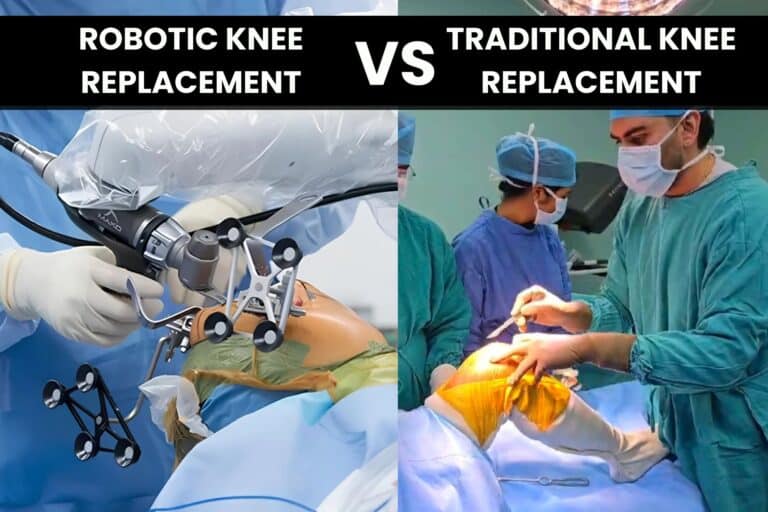
Knee pain can slowly take away the joy of everyday life. Simple activities like climbing stairs, walking to the market, standing for long hours, or even sleeping comfortably can become difficult when the knee joint is severely damaged. For many people over the age of 50, advanced knee arthritis reaches a stage where medications, physiotherapy, and injections no longer provide lasting relief. At this point, total knee replacement surgery becomes one of the most effective treatment options.
Today, patients have another important decision to make—should they choose traditional knee replacement surgery or opt for robotic-assisted technology? While both procedures aim to reduce pain and restore mobility, robotic-assisted surgery has introduced a new level of precision that is transforming orthopedic care.
If you are considering knee arthritis treatment, understanding the differences between robotic and conventional techniques can help you make an informed decision. An experienced robotic joint replacement surgeon in Ahmedabad can evaluate your condition and recommend the most suitable approach based on your age, lifestyle, bone health, and expectations.
At Mediheal Hospital, our orthopedic specialists combine advanced technology with years of surgical expertise to deliver personalized treatment plans that help patients return to an active and pain-free life.
What Is Total Knee Replacement Surgery?
Total knee replacement surgery is a procedure in which the damaged cartilage and worn-out bone surfaces of the knee are replaced with specially designed artificial implants. These implants recreate the natural movement of the knee joint while eliminating the pain caused by arthritis or injury.
The surgery is commonly recommended for patients suffering from:
Severe osteoarthritis
Rheumatoid arthritis
Post-traumatic arthritis
Chronic knee pain affecting daily activities
Limited knee movement
Knee deformities
Failed conservative treatments
Modern knee replacement surgery has one of the highest success rates among orthopedic procedures, allowing most patients to enjoy improved mobility and a significantly better quality of life.
Why Is Knee Replacement Becoming More Common?
The number of knee replacement surgeries has increased worldwide because people are living longer and want to remain active even after the age of 50.
Several factors contribute to severe knee damage:
Age-related cartilage wear
Obesity
Previous sports injuries
Genetic factors
Sedentary lifestyle
Inflammatory joint diseases
Many patients delay surgery due to fear or misconceptions. However, waiting too long may lead to worsening joint deformity, muscle weakness, and prolonged recovery.
Understanding Traditional Knee Replacement Surgery
Traditional knee replacement has been successfully performed for several decades and remains a reliable treatment option.
During this procedure, the orthopedic surgeon uses specialized surgical instruments and anatomical landmarks to remove damaged bone and cartilage before placing the knee implant.
The success of conventional surgery largely depends on:
The surgeon’s expertise
Surgical planning
Accurate implant positioning
Proper rehabilitation
For many patients, traditional surgery provides excellent long-term pain relief and improved function.
Understanding Robotic Knee Replacement Surgery
Robotic-assisted knee replacement is an advanced form of total knee replacement surgery that combines surgeon expertise with sophisticated robotic technology.
Contrary to popular belief, the robot does not perform the surgery independently. Instead, the surgeon remains in complete control throughout the procedure.
The robotic system assists by:
Creating a detailed 3D model of the patient’s knee
Mapping damaged bone precisely
Planning implant positioning
Guiding accurate bone preparation
Helping preserve healthy tissues
Improving alignment during surgery
An experienced robotic joint replacement surgeon in Ahmedabad uses this technology to personalize every surgery according to the patient’s unique anatomy.
How Does Robotic Surgery Improve Precision?
Every person’s knee structure is slightly different.
Traditional instruments rely on standard alignment techniques, whereas robotic systems analyze each patient’s individual anatomy.
The robotic platform allows surgeons to:
Measure bone cuts accurately
Maintain proper ligament balance
Minimize unnecessary bone removal
Optimize implant placement
Improve joint alignment
This increased precision may contribute to better knee function and patient satisfaction after surgery.
Robotic vs. Traditional Knee Replacement: Key Differences
Surgical Planning
Traditional surgery uses standard measurements and manual instruments.
Robotic surgery begins with advanced digital planning that creates a customized surgical map.
Implant Positioning
Implant positioning plays a major role in the long-term success of knee replacement.
Robotic systems help surgeons achieve highly accurate implant placement based on the patient’s anatomy.
Bone Preservation
Robotic assistance helps remove only the necessary damaged bone while preserving healthy tissue whenever possible.
Soft Tissue Protection
The robotic platform assists surgeons in protecting surrounding ligaments and soft tissues, potentially reducing surgical trauma.
Surgical Accuracy
One of the biggest advantages of robotic-assisted surgery is its enhanced level of precision compared to conventional methods.
Recovery Timeline: Robotic vs. Traditional Knee Replacement
One of the most common questions patients ask is about knee surgery recovery time.
Although every patient’s recovery is unique, robotic-assisted surgery may allow for a smoother early recovery because of improved precision and less disruption to surrounding tissues.
First 24 Hours
Most patients begin standing and walking with assistance within the first day after surgery.
Pain is managed using modern anesthesia techniques and medications.
First Week
Patients gradually increase walking distance using a walker or support.
Physiotherapy starts immediately to improve knee movement and muscle strength.
Two to Six Weeks
Many patients become more independent in daily activities.
Walking becomes easier with continued physiotherapy.
Those undergoing robotic-assisted surgery may experience improved comfort during early rehabilitation, although recovery varies from person to person.
Six to Twelve Weeks
Most patients resume routine household activities.
Driving may be possible after medical clearance.
Walking without support becomes easier for many patients.
Three to Six Months
Strength continues to improve.
Patients can enjoy walking, gardening, shopping, light travel, and other low-impact activities.
One Year
Complete healing and maximum functional improvement may continue for up to a year following surgery.
Factors That Affect Knee Surgery Recovery Time
Several factors influence knee surgery recovery time, including:
Age
Overall health
Weight
Bone quality
Diabetes control
Smoking status
Commitment to physiotherapy
Surgical technique
Implant positioning
Experience of the orthopedic surgeon
Choosing an experienced robotic joint replacement surgeon in Ahmedabad can contribute to better surgical planning and postoperative outcomes.
Success Rates of Knee Replacement Surgery
Modern total knee replacement surgery has an excellent long-term success rate.
Clinical studies have shown that:
Most patients experience significant pain relief.
The majority regain improved mobility.
Many implants last 15–20 years or longer with proper care.
Patient satisfaction remains high after successful rehabilitation.
Robotic-assisted procedures continue to demonstrate promising results in implant accuracy and early functional recovery, though long-term success also depends on proper rehabilitation and patient health.
Which Patients Benefit Most from Robotic Knee Replacement?
Robotic-assisted surgery may be particularly beneficial for:
Active adults over 50
Patients with severe knee arthritis
Individuals with knee deformities
Patients seeking highly personalized treatment
Those wishing to return to active lifestyles
Patients requiring precise implant alignment
However, not every patient requires robotic surgery. A thorough evaluation helps determine the most appropriate option.
Is Traditional Knee Replacement Still Effective?
Absolutely.
Traditional knee replacement continues to be an excellent procedure when performed by experienced orthopedic surgeons.
Many patients have enjoyed decades of pain-free movement after conventional surgery.
The choice depends on:
Patient anatomy
Severity of arthritis
Medical condition
Surgeon’s recommendation
Availability of robotic technology
Preparing for Knee Replacement Surgery
Proper preparation improves recovery.
Patients should:
Complete all recommended medical tests
Manage diabetes and blood pressure
Maintain a healthy diet
Strengthen leg muscles before surgery
Stop smoking if applicable
Discuss current medications with the surgeon
Arrange family support during recovery
Life After Knee Replacement
After successful total knee replacement surgery, many patients return to activities they had avoided for years.
Most patients can comfortably:
Walk longer distances
Climb stairs
Travel
Perform household activities
Enjoy social gatherings
Participate in low-impact exercises
Improve overall fitness
High-impact sports like running or jumping are generally discouraged to increase implant longevity.
Tips for Faster Recovery
Patients can support healing by:
Following physiotherapy regularly
Walking every day as advised
Taking prescribed medications
Maintaining healthy body weight
Eating a protein-rich balanced diet
Staying hydrated
Performing home exercises consistently
Attending follow-up appointments
Consistency is one of the most important factors for a successful recovery.
Why Choose Mediheal Hospital for Knee Replacement?
At Mediheal Hospital, patients receive comprehensive orthopedic care supported by advanced technology and experienced specialists.
Our orthopedic department focuses on:
Personalized treatment planning
Advanced robotic-assisted knee replacement
Comprehensive knee arthritis treatment
Modern operation theatres
Experienced orthopedic surgeons
Advanced rehabilitation programs
Patient-centered care
Long-term follow-up support
Whether you require conventional or robotic-assisted surgery, our goal is to restore mobility, reduce pain, and help you return to an active lifestyle safely.
Conclusion
Choosing between robotic-assisted and traditional total knee replacement surgery is an important decision that should be made after careful consultation with an experienced orthopedic specialist.
Both procedures are highly successful in relieving pain caused by advanced arthritis. However, robotic-assisted surgery offers enhanced precision, personalized planning, and may contribute to improved implant positioning and smoother early recovery for suitable candidates.
If persistent knee pain is limiting your daily activities despite medications, injections, or physiotherapy, it may be time to consult an experienced robotic joint replacement surgeon in Ahmedabad. Early evaluation can help determine the most effective treatment plan before joint damage becomes more severe.
At Mediheal Hospital, our commitment is to provide evidence-based orthopedic care using advanced technology, compassionate support, and individualized treatment plans that help patients regain confidence, independence, and a better quality of life.
Frequently Asked Questions (FAQs)
Is robotic knee replacement better than traditional knee replacement?
Both procedures are effective. Robotic-assisted surgery offers greater surgical precision, customized planning, and accurate implant positioning, while traditional surgery continues to provide excellent long-term results when performed by experienced surgeons.
How long does knee surgery recovery time usually take?
Most patients begin walking within 24 hours after surgery. Daily activities improve within 6–12 weeks, while complete recovery may take 6–12 months depending on overall health and rehabilitation.
Who is the ideal candidate for robotic knee replacement?
Patients with severe knee arthritis, persistent pain, reduced mobility, or those seeking personalized treatment may benefit from robotic-assisted surgery. Your orthopedic surgeon will determine whether it is the right option.
How successful is total knee replacement surgery?
Total knee replacement surgery has a success rate exceeding 90% in relieving pain and improving mobility. Many modern implants last 15 to 20 years or longer with proper care and regular follow-up.
Is robotic knee replacement more painful?
Pain levels are generally similar or slightly lower during early recovery for some patients because robotic-assisted surgery may reduce unnecessary tissue damage. Individual experiences vary.
When can I walk after knee replacement surgery?
Most patients begin walking with assistance within the first day after surgery under the supervision of a physiotherapist.
Will I need physiotherapy after surgery?
Yes. Physiotherapy is an essential part of recovery. Regular exercises help improve flexibility, strengthen muscles, restore knee movement, and achieve the best possible long-term outcome.
Can both knees be replaced at the same time?
In selected patients with good overall health, both knees may be replaced during the same operation. Your orthopedic surgeon will evaluate whether this approach is suitable for you.
How do I choose the right robotic joint replacement surgeon in Ahmedabad?
Look for an orthopedic surgeon with extensive experience in joint replacement, access to advanced robotic technology, a strong track record of successful outcomes, comprehensive rehabilitation services, and a patient-focused approach to care.